Showing posts with label OUGD202. Show all posts

Wednesday, 8 February 2012

Top 10 things; end of module self-evaluation.

1. What skills have you developed throughout this module and how effectively do you think you have applied them? 
Throughout this module I have developed a range of skills, each of which have been very useful to the overall outcome of my work. One of the first skills I learnt was storyboarding, this was a necessary part of design development because it meant I could experiment with ideas on paper before putting them into a digital format. Producing a range of storyboards before choosing an idea was a useful part of both briefs within this module because I got some of the 'worse' ideas out first and then came up with the better ones. I think this storyboarding skill was applied better in the Silent movie brief as I created numerous storyboards so that I had a lot of ideas before I decided to make a decision. There seemed to be a lot more effort put into storyboarding for this brief as at the time it felt necessary to really push this skill so I understood it properly. Although I created storyboards for all of my final sequences within the top ten brief I feel as though this skill wasn't applied as effectively because the quantity of storyboards was a lot smaller than with the silent movie brief. I feel that this occurred because I felt as though I had understood the skill from the previous brief so didn't really push it in the second brief. The storyboards I did create, I just settled for straight away without pushing ideas to their full potential and exploring a range. Although the fact I didn't use storyboards to their full potential within the top ten brief is a negative thing, I think the ones I did produce are detailed in colour and annotation to communicate my ideas clearly. From this storyboarding skill I also learnt how to use a paper timeline and learnt to understand where you plot things within this and how much it can benefit you when it comes to putting your ideas into after effects. One of the main things I took away from learning this skill was that as long as the storyboard made sense to you, it didn't matter so much if it didn't make sense to anyone else because I'm the person that needs to be able to understand it to take it to the next stage of the development process. This skill was applied on a linear level within the silent movie brief because I plotted a few basic storyboards onto timelines to begin to understand how many frames I would need for each of my sequences. I however, feel as though I have let myself down with the skill within both the silent movie brief and the top ten brief because it has only been applied in one brief and only once. I put this down to general time management because once I had created storyboards I took them straight into after effects because I felt it was important to start creating my sequences as soon as possible as I knew this was quite time consuming in itself. I did find it quite difficult to get my head around this skill when I thought about it in terms of the top ten brief because its quite hard to guess where things are going to occur within the timeline until you start moving images around in after effects, especially when they move in time to music. The main skill I have learnt through this module is how to use the after effects software because I had no experience with this at all. This skill was obviously a huge part of the module because it was where the final sequences were to be produced. I think these software skills have been applied effectively because I have produced suitable final outcomes that I am pleased with and they show a range of skills i've learnt within the software itself in terms of movement and keyframing. I feel I have applied movement skills within after effects in the simplest possible way but think that this is what makes my sequences suitably effective because overcomplicating something can make it quite hard to interpret. My final sequences definitely show a level of understanding of the software and I think as a first attempt they look informed. The organisation of folders is also another skill i've picked up that links to after effects. This is because for the sequences to work everything has to be held within the same folder so it was quite important to be organised otherwise the sequence files would come up with errors and a lot of time would be wasted hunting for the relevent files. Time management was a huge part of this module so I feel that this has developed in the sense that I had to be aware of how long these sequences would take to produce and be constantly making sure I left myself enough time to contend with any errors, this also involved prioritising my work. These are the main skills I feel I have developed throughout this module. 

2. What approaches to/methods of design production have you developed and how have they informed your design development process? 
One of the methods that I have developed throughout this module is that due to the nature of the module everything has to be produced in a particular order because one thing informs another, so this could be categorised as organisation. There wouldn't really be development as such if it wasn't for this approach. A massive part of the design production was creating storyboards because the ideas had to be down on paper before I went into after effects to begin producing them. This method informed my design development process because I could exeperiment with the ideas I had in my head and get a better feel for how they may look and I could also eliminate any of the 'uneffective' ideas. It also meant that once I had produced these storyboards I could move on to the next stage which was actually making them digital. The storyboards make up quite a big section of design development because they indicate where ideas began and where they are going to so in a sense represent a thought process. 
I hand drew outlines for all of my artwork before I decided this would save time when it came to developing the artwork further if these outlines were already there. This was a major part of development because without these outlines I wouldn't be able to move forward within the design process. I took these outlines into photoshop to make my imagery digital, although this was a skill I had already, by using this format for my artwork I learnt a new skill within after effects in terms of importing the work in sequences and the formats I needed to use. This has informed my design development because it meant that my ideas started coming to life and was the start of the comic book asthetic I wanted to use for all of my sequences. It also meant by using this method I could then quite easily take this artwork forward into my sequences. 

3. What strengths can you identify in your work and how have/will you capitalise on these? 
My ability to produced hand rendered work before anything digital has been a strength throughout this module because I have a lot of physical work to support the digital design decisions I have made and the decisions I have made throughout each brief are clear to see through this. To capitalise on this I will keep up the same standard within future briefs and consider producing even more hand rendered work before making a decision so i've explored every possible outcome. This is of course if it suits the brief. Time management has been a strength throughout this project because I had to constantly make sure I was on top of my sequences as they took quite a lot of time to produce, especially if there was any errors. I had also produced my final sequences just under a week before the deadline so this gave me plenty of time to deal with any issues that arose. I can capitalise on this by making sure that i'm really organised with any other future briefs so that if there is changes that I need to make, I dont feel rushed to make them. I feel that I have become more confident with decisions because i've used a lot of colour within the top ten brief and usually I keep colour within my designs to a minimum so this was in a sense a form of risk taking for me because it may not have worked. To capitalise on this I can continue to make sure that I take risks within my work because I won't know how effective something can be until I actually try it and if this doesn't work then at least this can be added as part of the development process. The main strength I have got from this module is an understanding of how the software works and an ability to pick up new techniques within the after effects software quite quickly. This is shown through how my final sequences operate and the techniques I have used. I have also experimented with this software and this can be seen within development although experimentation is quite linear. To capitalise on this I can consider using the software in other briefs when given the opportunity so that I can extend the skills I have already learnt and come up with more complex outcomes in future. I could also consider going back to after effects in my own time so I don't begin to forget any of the skills I have learnt if I don't use the software for a long period of time. My ability to produce simplistic yet sophisticated packaging seems to be a strength within this module because although the idea was one of the last things I considered, i'm really pleased with the outcome. In future I could capitalise on this by making my ideas for print quite simplistic and then working up from this instead of trying to work with something complex straight away because the more simplistic idea could inform a complicated idea. The time spent on the storyboards I created is a strength because they are clear and communicate my ideas well, this however also falls into the weakness category for other reasons too. 

4. What weaknesses can you identify in your work and how will you address these in future? 
Storyboards have been a real weakness within the top ten brief because I haven't really experiemented much with ideas and I have chosen to produce the first ideas I came up with digitally in after effects. Although I don't feel this has let my final outcomes down as such, it has a massive impact on the development process because there isn't as much physical development as there could have been. Linking to this I haven't really used timelines within either of the briefs and this could be seen as a weakness because it might mean people think I don't understand this technique when there is no evidence of it, although I do. I don't feel as though this has hindered my work in any way really because I feel that you can never truely understand how something is going to move until you have it in front of you on after effects because the software does the moving for you and can be more precise than a hand rendered version. In future these are both things that I need to prioritise and make time for if I decide to produce work for another brief on after effects. 

5. Identify five things you will do differently next time and what you expect to gain from doing these? 
1. Visit the library more often for research material.
Although the internet is a great source, not everything you always find on there is 'true' so by using books you can tell that the sources are reliable. The library may also have something very relevent to what I am researching so I should make more time for it. 

2. Blog as I go. 
By doing this I won't have a build up of blog posts to annotate at the end of a module because i've got too into a habit of posting images and not actually annotating them until a later date. This is likely to cause less stress too and i'll be more organised so can be sure I won't have missed anything. 

3. Try and be more motivated from the begining of the module.
A lot of decisions for this module came quite close to the end so then it felt like more of a rush to get things done. Although this is not completely in my control, I could try and push myself to make decisions at an earlier stage. By doing this my outcomes could be more informed and the resultions may be a lot more rounded. The level of work could also be higher. 

4. Stay at uni more 'after hours' and come in on weekends more. 
There tend to be less distractions at this time of the day or on a weekend and no temptation to do something different than my work because I don't have the options like I would at home. Although I get quite a lot of work done from home I feel that if i'm in the uni environment this would encourage me to work at a faster rate and would maximise my time more effectively. 

5. Manage my time. 
Although I have positive time management skills already I feel that there is still potential for improvement because I don't always prioritise in the correct order. Sometimes I do the things I enjoy most instead of the things that are needed sooner for things like crits. If I prioritise more effectively then this could also lead to better orginisation of all the briefs I have going on for different modules. 

6. How would you grade yourself in the following areas: 
Attendence 5
Punctuality 5  
Motivation 3
Commitment 4
Quantity of work produced 3
Quality of work produced 3
Contribution to the group 4
(1 being poor and 5 being excellent)

Tuesday, 7 February 2012

Top 10 things; test crit.


This was a final crit to test our dvds and make sure everything was working as it should. I had noticed that on testing my dvd it was skipping a bit whilst it was in the disc drive but we were told this was a general thing that happened because of the connection between the dvd and the mac and to solve this, files could be copied over on to the desktop and they would play all the way through properly. This crit was quite useful in the sense that it gave us an idea of the sort of feedback we may get back after the module submission because people are likely to pick up on the same things, as though it was too late to make any major changes at this stage. Some of the comments given on my feedback were 'void' in a sense because at the time the internet was down so some of the things that were commented on were actually visable on my blog. The fact we were with friends for this crit was a bit of bonus really because I know they would give me completely honest constructive feedback where as sometimes people may hold off a bit so that they don't offend you in any way. The mix of positive comments and improvements to be made on my feedback was much welcomed because as with most things there is always room for improvement and its good to hear someone elses take on the work you have produced. This crit was successful because there were no issues to be found with my dvd and everything worked as it should. 

Top 10 things; DVD packaging.


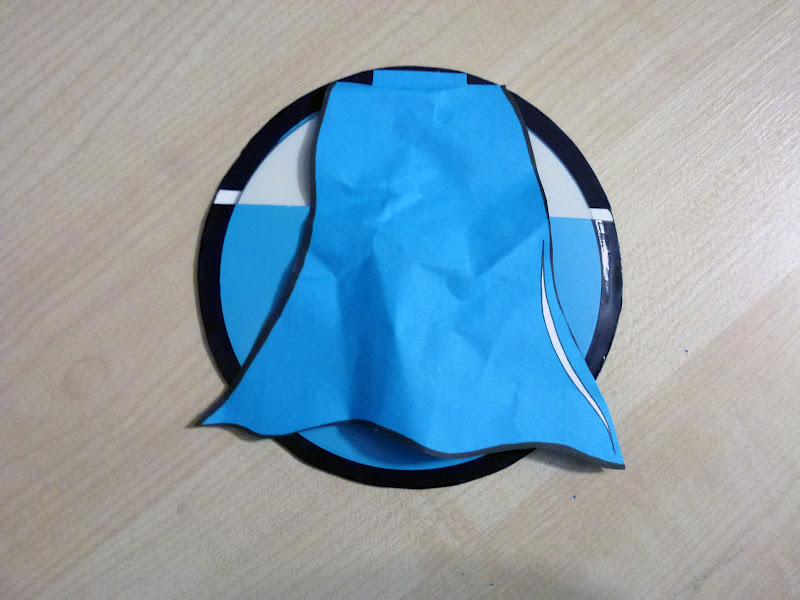
I wanted to keep the DVD packaging for my submission quite simplistic because this is one characteristic that everything else I have produced for both briefs has. I decided that because my chosen topic for the top 10 brief was superheroes I would create a superhero logo for myself and turn this into some form of packaging. This meant that it would be unique to me and has more consideration than just using an exsisting superhero logo. I wanted to use the font I had used throughout all of my sequences so that my packaging and sequences could be linked together as they are part of the same brief so this was a good starting point for my packaging. I experimented a little bit with colour, the main one being blue as this is my favourite one, but couldn't find a combination that I liked more than simple black and blue. The black adds a nice touch because it makes the design look bold and stand out. The reason I have also included stars on the logo is because I have a star tattoo so this is and the blue added together make the packaging unique to me, the stars are also a nice touch because otherwise the design looked quite plain. I've kept my packaging minimalist because I felt there was no need to have too much to it with its use just being to hold my DVD. I feel the packaging has been executed well because the dvd fits perfectly into the slot i've made for it. I also added a little cape to the design just to make it a little more superhero-esk and think this is quite a quirky feature. The logo/dvd holder part was printed on photo paper because this makes it bold, stand out and gives it quite a high quality finish. I decided to print the cape on normal paper so that I could scrunch it up and give it this textured look which adds a nice finish to the overall packaging design. Overall although my packaging is quite an obvious reponse given my brief subject, I feel that simple is sometimes most effective because it communicates with no confusion. 


Sunday, 5 February 2012

Top 10 things; FINAL SEQUENCES & POST PRODUCTION STORYBOARDS.


Final batman sequence: This is one of my favourite final sequences. I think the fact that you can make a connection between batman and the sequence straight away without even seeing this character works really well because it means that my idea is communicating from beginning to end. Two main factors that help make this connection is the soundtrack I have used because this is a well known batman soundtrack and also the colour scheme. This sequence is also successful because there is constantly something happening within it which is more likely to keep the audience interested. Initially when I was experimenting with the text for this, I wanted it to fade out completely near the end of the sequence but I actually think the fact the sequence ends with a variation of transparencies on screen works really well because they complement each other. I also feel that because it stays on the screen but ever so lightly it means that the audience won't miss the relevent information and it may hopefully stick in their mind. The fact the image of batman comes in quite quickly is another good feature because its as though he is responding to the light 'call' at great speed and saving the day as fast as possible. 


Final Catwoman sequence: With this sequence I had to think more creatively about the concept because catwoman doesn't have a specific trait as such like superman flys etc. I decided that working with the fact she is a 'cat' would make for quite a good sequence because the movement could represent that of a cat which then means I'd need to locate a specific type of music to compliment this movement. So one decision informs the other and together the two could work really well. A trait for superheroes is the fact they are very careful about coming on to a scene so the fact the E4 logo 'checks' the frame before it enters links well with this idea. The scratches that come across the logo are another good trait that a cat has and make this superhero seem like a threat. The one thing that overall makes this sequence so successful is the soundtrack because its one in which I imagine something to be creeping about in the shadows like superheroes often do and it has a quite a creepy element to it so creates suspense. This sequence is quite slow but this pace fits really well with the soundtrack I have chosen.


Final spiderman sequence: There was an obvious movement I wanted to potray within this sequence based on the fact spiderman gets around via a web that he swings from. The fact he randomly swings in from one side of the frame works really well because this is a specific trait spiderman has in which he appears from no where to make his 'victims' jump. I intially experimented with making the logo swing in from the left hand side but if i'd have stuck with this idea the sequence would have been quite boring because it would have consisted of this one main swinging element. The logo scales up at a good time because its fitting with the timing of the soundtrack so it makes it seem like the change in soundtrack is an indication that something else is about to happen and then the programme information coming in after this also has a similar impact. The swinging technique within this sequence didn't really take too long to get to some stage that I was satisfied with because it was a recent technique i'd just learnt in one of the software workshops and I was really pleased I was getting to put it into practice straight away because it meant I was more likely to remember it for future reference.


Final superman sequence: This is my favourite sequence out of all the ones I have created because although the ideas seemed quite obvious, I had quite a lot of fun creating it because I experimented more so with this sequence than any other. This was because it was one of the first sequences I created so I was still getting to grips with how the software worked in terms of making my artwork move. Although the actual motion path of the artwork is quite simplistic the two elements that make this whole sequence are the E4 logo and the soundtrack I have used. The logo is a significant part of this sequence because its a huge indicator of the superhero featured within the ident and the contrast between the background and this logo makes the sequence seem all the more interesting. I intially used a different soudtrack but after advice from a crit to use music with 'trumpets' included i'm really glad I decided to change this. The soundtrack included within this sequence has a much higher impact and gives superman this big enterance he is well known for. The soundtrack is also within keeping of the timing of the sequence quite conveniently without me having to change any of the keyframes placed for the previous soundtrack. 


Final 60 second sequence: Although I think my title sequence is really simple I think this is what makes it effective because it shows that I have understood elements that I have learnt within workshops and makes for easy watching overall. One of the first things I did when I started creating this sequence was listen to my soundtrack through to the end of the one minute, adding in tags along my timeline to show where there was a specific beat within the track. By doing this it would give me an idea of where I should introduce my imagery so that it fit with the timing of the soundtrack when both are played through together. I decided to use just the silohettes and logos of the superheroes throughout this sequence because I felt they held enough information on their own and introducing any form of information via text would detur from the impact they could have meaning they wouldn't fullfill their potential. Using a different colour background for each transition that linked to the superhero was another element that would make the sequence particular interesting because it meant that each transition would be unique and keep the audience interested. Having the backgrounds move from left to right links to the idea that when you read and comic book you read from left to right and this is successful because the whole sequence is based upon a comic book asthetic. Although the ending of the sequence seems quite plain, I feel this is something that kept the sequence within reach of its target audience because if it played around with it too much or made it too fancy in terms of a variation of fonts this is something that could have began to make it look more childlike. The font itself reminds me a comic book asthetic because its exaggerated and reflects a certain style but having it as just plain black text adds a level of sophistication overall.

I feel the comic book asthetic I have given to all of my sequences doesn't draw them away from their target audience because superheroes originally came from comic books and cartoons so this idea is just taking it back to where it began. These sorts of programmes are usually quite light hearted so this also made it seem appropriate as well as the type of channel i'd chosen. The fact my sequences are quite casual works well because it fits the asthetic of the E4 television channel.


I decided to create post production storyboards for all of my sequences because I felt this could maybe help me understand what has actually gone into each sequence. I took 15 screenshots for all of my idents as I felt this was a significant amount to understand the movement happening with the sequences from start to finish. Due to the fact the title sequence was longer, I couldn't really estimate how many screenshots I would need for this so instead I decided to take one where I thought there was a signifcant change within the sequence. Creating these storyboards has been quite interesting because I could put them alongside the pre production storyboards I created and look at how closely I have matched some of the movement I had within my intial ideas. It will also show me what changes have occured since I created these original storyboards. They have also made me realise that my final title sequence isn't quite as simplistic as I thought because when things are slowed down you actually realise that there is a lot more happening than you intially thought and a lot more techniques happening at the same time than you give yourself credit for. 

Wednesday, 1 February 2012

Top 10 things; final crit.


Due to this being the final crit and almost a week before the deadline any feedback would be good feedback but there wasn't nescessarily time to make drastic changes to the work i'd already produced. There was a lot of small changes advised that I had time to work into what i'd already done and some of these consisted of annotating storyboards, choosing seperate soundtracks for each of the idents (maybe to suit the superhero), using an uppercase font for higher impact and use easy ease on certain parts of the sequences. Although all these things are quite minor really I feel as though by doing them it could make a big difference to my work and if I feel as though they aren't working it can just be added to my development. One of the comments that stood out within this crit was the fact I could have thought about my ideas more conceptually, although it's really too late at this stage to change my sequences as much as that, this would have been quite a nice idea to work with. It will stick with me because it means I should sometimes think a bit more outside of the box and I will take this into account when doing the next brief. 

As part of this crit we had to write down three questions that we wanted to ask because you don't always have your questions answered within feedback. 
Does the style suit a comic book theme? 
Is the soundtrack appropriate? 
Does the use of JUST imagery work? 
All my questions were answered and the first and last question were both 'YES' but with the soundtrack I was advised to search for more and have inividual soundtracks for the sequences which is a good point to make because its a way of defining the personality of each of the superheroes as they won't all have the same asthetic. 

It was again another crit with a whole new set of people so I could further be sure that my ideas were communicating exactly how I wanted them to without me explaining anything. This was another crit where I wrote myself an action plan of what I had to do within the final week of the project to fullfill the brief to my best potential given the time we had left. 

Wednesday, 25 January 2012

Top 10 things; interim evaluation.


This interim evaluation gave me the chance to reflect on the work I had done so far and see exactly how much progress I was making. The fact it had categories was really useful because it meant you could consider all aspects of your work rather than just thinking about certain elements such as sequence progress as this seemed quite high on the list of priorities at the time. It made me think about the things I could improve on throughout the rest of the duration of this project but also things I could improve on in the long term because a lot of the weaknesses are things that tend to come through in other projects too sometimes. It wasn't all bad because I could also see my current strengths within this project and could think about how I could maximise these. After reflecting on my progress I wrote an action plan so I knew exactly what there was left to do before the module submission. Straight away the fact I have quite a few things on there means that I could start building on my weaknesses if they were relevent to these things. The action plan was a good way of organising my time because it made me think about if there was anything I had forgotten about and also how I should prioritise these things. 

Wednesday, 18 January 2012

Top 10 things; second crit.


This crit was another very useful one because I was at a stage where I had started to storyboard my ideas  and because there was still time to change these ideas, any useful feedback that included change was much welcomed because it may help me develop better ideas. At this point I had only created storyboards in which I used red, black and white and I hadn't really considered using anything other colour. There were a lot of key things mentioned in areas for improvement that i'd either forgotten about or just generally hadn't really thought about yet. The fact I haven't begun to use after effects at this stage for these sequences is really hindering me because my storyboards have no understanding of what capabilties there is and are therefor quite simplistic and boring. Some of the really important points made in this crit that I feel will help me move on is to look at the comic book asthetic and see how I can work with this, use colour that relates to each film because this automatically will help the storyboards look a lot more exciting and begin experimenting with textures as this may make simple ideas come to life a bit more. 
I then wrote myself an action plan again that I could use to go away and explore some of these things brought to light at the crit. This would again help me move on from the stage that i'm at and hopefully develop my ideas into something better. I feel that because this was the first time the people in my crit group had seen my ideas/work that I got very genuine feedback as because I wasn't talking about the work it was just a case of how they interpreted my ideas. It was clear that the ideas were communicating how i'd like them to, there is just area for improvement which I will take forward. 

Thursday, 12 January 2012

Top 10 things; revised concept boards.


After crits and feedback i'd been given my ideas began to change quite significantly so I thought it was also necessary that I updated my concept boards to fit with this so that someone who was viewing these for the first time could tell exactly what I was thinking without me having to explain these ideas were now incorrect on my previous set of concept boards. The main changes I made to these boards were the 'top 10' after advice that having a greater range of characters would make my work more interesting, adding quotes from the films instead of reviews because the way I want to interpret this top 10 is that its about each of the films and not really public opinion, updating the visuals because i'd made a decision to use sillohettes and also changing my colour pallet because I'd made the decision to use colours from each of the films. I'd also decided to use just Grobold font for my sequences so I didn't need to include all the other fonts as seen on previous boards. Even though these changes seem pretty minor it makes sense to update the boards as they are a vital part of the project because the evaluate my ideas. 

Time management.

To help me better organise myself throughout this module I decided to write tasks down in my diary on the day I got them so then I could go back and do these tasks within self directed study, on an evening or an a weekend. This would mean I wouldn't forget about anything and i'd know exactly what I had to do for the following the week. I would just tick each task off the list as it was done. 

Top 10 things; first crit.


For the first crit we had to prepare our concept boards so we could present the ideas to a small group of people to see if we were going in the correct direction and if anyone could give us any guidance. This crit was particularly useful because I didn't really have any ideas in mind at this point and people began to suggest things to me that I could experiment with and it really got me thinking about how my sequences could begin to work. One of the main useful pieces of advice was to go back and revisit my top ten because i'd used sequals for some of the superhero films and it was pointed out that this might not be very interesting when it comes to creating my sequences as the imagery would be similar. To solve this problem I would go back to the survey I did and choose some of the next popular films so there is a greater range. This crit also gave me some idea of what imagery I could begin to experiment with because I was quite stuck on which direction to take wether it be a cartoony looking style or a more realistic one. Another good piece of advice was to extend my target audience to 30 years old, this was another thing I was unsure about because superhero films are so popular that you are always likely to miss someone out of the age range, but it needed to be defined to a certain point and the choice of channel helped with this. 
After this crit I came to the conclusion that I needed to go away and really defined what it is that i'm trying to do and what direction I want to take because as it stood, I had no solid ideas. I wrote a list of things on my action plan that I had to away and look at in the next week or so in time for the next crit and also wrote a little reason why I would do this to show how it would help me move on. I also decided that I would take a cartoon-like approach to my illustration which will later become clear why. 
On top of this we were told what stage we needed to be at in time for the next crit and in a way this should help me organise my time so that I manage to do all of these things. 

Monday, 9 January 2012

Top 10 things; concept boards.


Based on the fact my chosen subject is 'the top ten superhero films' I created concept boards to suit for my intial ideas so when it comes to things like the crit people can see what i'm beginning to think i'll do in terms of my sequences, what inspires me and certain elements i've started to consider that will exsist within my sequences. A lot of the elements I have put together for these concept boards have come together quite easily because they are based on research I have done or decisions I have already made. I found it quite difficult to come up with specific content (in this case reviews) because at this stage I pictured my sequences to be mostly image based in a sense that they would leave the audience guessing. Visual concept came about as a quick decision because I hadn't really thought about backgrounds, textures and colour or how I wanted it to look specifically because I knew these decisions would change as I began designing. I placed colours that I knew were linked to superheroes and particular fonts I may consider using as a starting point. This board in particular will have to be revisited at some point to suit my idea better once I have thought more about the specifics. I feel as though these boards communicate a general idea but it needs to be more focused once I am given feedback on this. 

Silent movie; FINAL SEQUENCES & STORYBOARDS.

I decided to use the word 'spin' for all my final sequences instead of 'spin' and 'float'. This is because I feel as though I came up with better ideas for spin that would test my after effects skills more so than the other word. It also meant that I could challenge myself more because I had to come up with five different sequences for the same word and wanted to make each stand out from the other. 

Probably the most simplistic of all my sequences as this was the stage in which I was just getting to grips with the after effects software. It shows a simple spin sequence using the rotation tool as though it is sat on a central axis. There is no particular relevence to the inner of the 'P' being a different colour, I just feel as though it makes the sequence look a bit more interesting with this added hint of colour. Using a lightweight font suits the word because lighter objects tend to spin easier so I imagined the same would work for light fonts if there were actually able to spin. The font was also chosen because it has quite a rounded look to it and when I personally think about things spinning I automatically picture an image of circle. Spin is usually connected to quite a fast movement but I also feel that it could be slow too so I wanted to represent this within my sequence. I think this works so well because its very simple and no confusion can be caused as to whats occuring in this sequence. 


I used the same font and style imagery as the sequence above to create my second sequence because I came with a less literal idea I felt it could work for. This sequence has the idea that the text looks as though it is going round in a circle, linking back to the point I made previously that spinning reminds me of circles, the text looks as though it is following a path and when it stops it will have spun round in a circle in terms of position but not actual rotation. This idea could maybe be a little more successful if I was to speed the sequence up a bit seeing as it only hints at the idea of spinning and isn't very self explanitory but it was a step in the direction of looking at less literal ideas. 


This idea began as quite a simplistic one with just a normal letter 's' going across the page when I decided I was happy with the sequence. To make it look a bit more exciting I altered the artwork in photoshop so that the letter 's' had a wave to it and then I added in the black lines. Once I played this back in the sequence it made me realise that the 's' looked like a boomerang. The fact that the 's' stops at the end of the frame and does not completely go off is intentional because its as though someone has caught the boomerang. This sequence is quite successful overall because it meant I could experiment in after effects with the idea of rotation at the same time as movement and see how the two techniques worked together. 

This sequence was another which was less literal with the concept. I used the scale tool in after effects to make the letterform look as though it was rotating around a central axis. As I scaled the letter down and brought the size back up again it looks almost as though the letter is flipping, therefor spinning round but in a way thats almost as though its playing tricks on your eyes. Although this could probably be improved I feel that the concept is quite good because it came from just experimenting and playing around with different aspects of the letterform within after effects. It was a slower process than most of the other sequences because to make it look as though it was actually spinning the scale had to be slowly altered down and back otherwise it didn't have the same effect and sometimes i'd get so far and then a little bit woud go wrong so i'd have to start again. The black dot in the middle was a personal visual because when I watch this sequence I imagine there to be an invisible suspended path where this is that the letterform follows. 


The font used within this sequence was another one I chose because it was quite rounded and again the idea that to me spinning links to circles when I picture it in my mind. It's quite a good font to work with because although its quite thick it seems to be subtle at the same time. For this reason I decided to take more advantage of the white space within the frame and make the word a little bigger. Due to the dot being in a different colour and quite a bright one, the eye is automatically drawn to this which is a positive thing as this is the section of the sequence that moves. Having a capital letter at the beginning of the word was deliberate because as the dot is spinning round the rest of the word, this letter being heavier brings balance to the whole sequence. 


Part of the requirements for this brief stated that we needed to have a 15 frame post production storyboard for each of the sequences. This has really helped me understand my sequences better because when you are watching them through vimeo or MOV file you never see them in slow motion so although you are processing what is happening on the screen, are you really understanding the movement? It has also brought to my attention that within some of my sequence storyboards you can't really tell that the letter or word is spinning round, this tends to be with the more complex sequences so does this mean that the sequence is not as effective as I initially thought. The whole concept of creating these storyboards seems like an evaluation point in a sense because it is making me question wether or not there could be room for improvement on a lot of these sequences where the storyboards are harder to interpret. 

Although this may be the case I feel as though I have learnt a lot from the brief because I learnt how to use software that i've never been faced with before and I'd also never created moving image sequences before. Although my sequences are really simplistic, I feel as though I have really achieved something because i've learnt a lot throughout creating them about speed, timing and storyboarding. These are all things I wasn't really familiar with before in terms of my own work. One thing i've found most significant throughout this brief is the fact that storyboarding really helps a lot because without this I would have just been faced with a blank canvas on after effects and no idea what to put on it. Storyboading also helps get a range of ideas down so you can consider which are your best. I feel that everything i've learnt within the brief will definitely benefit me when it comes to creating sequences in the next brief. This has been a good starting point and learning curve.